
Industrial Maintenance and Repair: How NICRO Extends the Service Life of Special Alloy Components
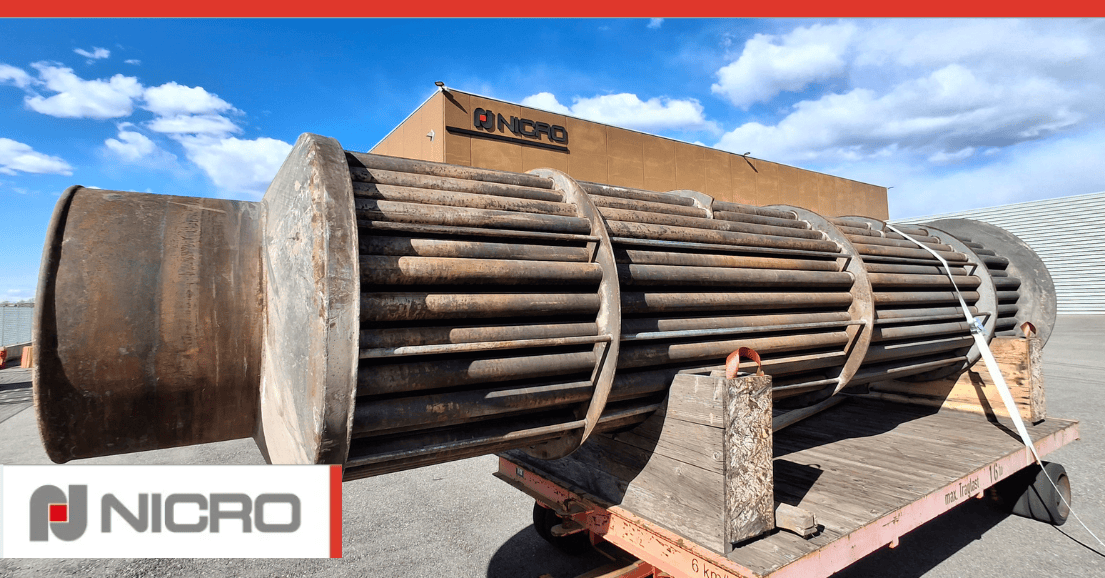
In industries such as steel, oil & gas, and shipbuilding, the reliability of every component is a structural and economic necessity. In environments characterized by extreme temperatures (often exceeding 1000 degrees) and constant corrosion, material deterioration is inevitable. However, a sudden failure can result in wasted raw materials, operational delays, and unsustainable downtime costs.
With over 40 years of experience in processing high-nickel steel alloys, NICRO positions itself as a strategic partner not only in the supply of new components but also in managing their entire lifecycle, offering reconditioning and repair services designed to restore components to optimal performance, ensuring operational continuity for its customers.
1. Maintenance and Repair: An Investment in Efficiency
Industrial maintenance is a cornerstone of production strategy. At NICRO, our approach to repair follows a rigorous and structured model designed to minimize variability and ensure repeatable results.
Repairing a critical component (such as a muffle, a radiant tube, or a convection fan) means not only saving on the cost of purchasing a new one but also operating with sustainability in mind. The reconditioning process allows us to analyze the wear condition and take targeted action, extending the service life of the component in use.
Relying on specialized personnel for repairs helps prevent latent defects that might surface in the post-sale phase. Every repair is designed to ensure that the welded joint or treated surface remains structurally sound in its actual operating environment.
2. Diagnostics and Inspections: Understanding Before Taking Action
At NICRO, quality is not an abstract concept, but the result of a documented process. Before proceeding with any repair, it is essential to examine the interior and surface of the material to detect even the smallest anomalies invisible to the naked eye.
Non-Destructive Testing (NDT)
To ensure that a repaired component is safe, NICRO applies various inspection methods:
- Visual inspection (VT): performed by specialized technicians to identify cracks, porosity, or surface misalignments.
- Penetrant testing (PT): essential for detecting invisible microcracks that could compromise the integrity of the component under thermal stress.
- Radiographic Testing (RT): used for internal analysis of welds in highly critical areas, ensuring there are no hidden volumetric defects.
Every welded joint during repair operations follows standardized procedures and is performed by qualified personnel.
3. When Repair Becomes Innovation: Reverse Engineering
Repair is not always the most efficient solution, especially when a component shows signs of premature wear due to an original design that was not optimized. In these cases, NICRO’s added value lies in its ability to transform a problem into an opportunity for improvement through reverse engineering.
Using 3D CAD design software and thermomechanical simulations, our engineering department simulates the component’s actual behavior under stress. This approach allows us to correct structural weaknesses, improving the design and extending the service life of the final product.
In this reconstruction phase, material selection plays a decisive role. Instead of replicating the existing material, NICRO selects austenitic and super-austenitic alloys certified to withstand temperatures exceeding 1100°C, such as AISI 310 or Incoloy 800H, the latter chosen specifically for its resistance to creep (permanent deformation) under mechanical load. By using varying thicknesses and alloys such as Alloy 617, we guarantee performance that exceeds common standards, ensuring that the recreated part is superior to the original in terms of durability and reliability.
4. The reliability of an integrated and certified process
Choosing to entrust your maintenance to NICRO means having the assurance that every service call is managed within a framework of operational excellence. Our company has consolidated its procedures into an Integrated Management System (IMS) that combines the most rigorous international standards into a single model of operational efficiency.
This means that every stage of the reconditioning process is traceable in accordance with ISO 9001:2015, ensuring that each batch can be traced back to specific materials and qualified operators. At the same time, our commitment to sustainability and energy efficiency, defined by ISO 14001 and ISO 50001 certifications, ensures that the repair process helps reduce the overall environmental impact and optimizes energy consumption, offering a competitive advantage for the customer in terms of ethical responsibility as well.
Finally, structural safety is guaranteed by the integration of ISO 3834-2 into the quality system, ensuring that every repair is not an isolated activity but a controlled process that safeguards worker health (in accordance with ISO 45001) and the long-term stability of your facilities.
Do you have a worn-out critical component, or are you looking to schedule preventive maintenance? Contact the NICRO design team today for expert technical advice and to discover how our special alloy solutions can improve your operational efficiency.


