
Welded Tubes vs. Cast Tubes: The technical comparison that redefines efficiency
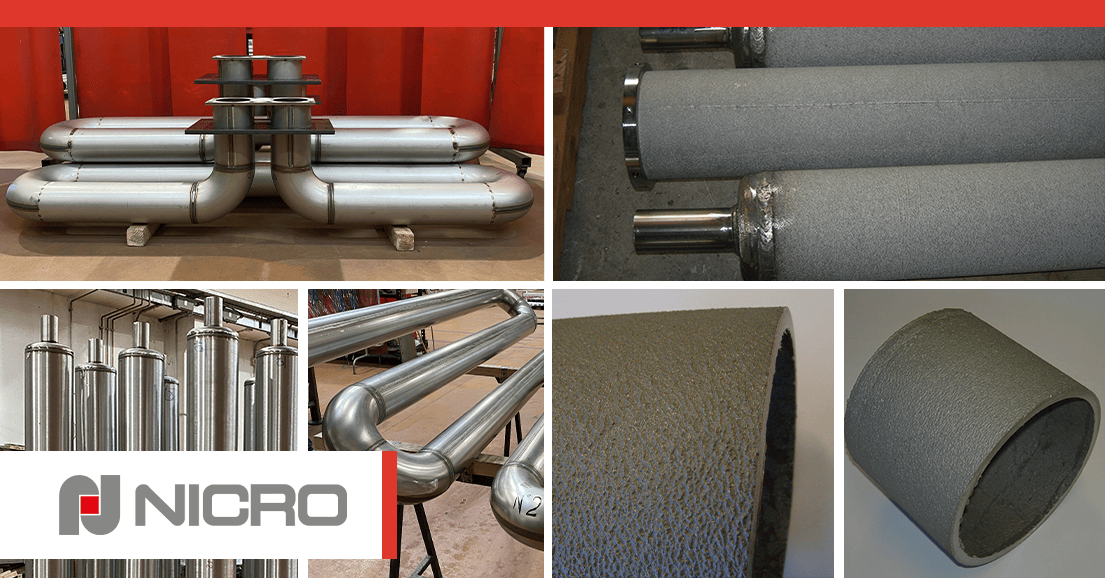
In extreme industrial environments, such as those characterized by high temperatures and severe corrosion (typical of the steel, petrochemical, and heat-treatment sectors) the selection of components is never random. Every element, especially piping, must ensure not only structural strength but also operational efficiency and durability that positively impact the overall economic performance.
For decades, centrifugally cast tubes, commonly referred to as “cast” tubes, have been a benchmark for many high-criticality applications. However, with technological progress and the growing demand for faster and more efficient production cycles, new-generation solutions are rapidly gaining ground.
With over 40 years of experience in developing and manufacturing ultra-resistant nickel-based steel alloy components, Nicro has both witnessed and driven this evolution. In this article, we explore the debate between welded tubes and centrifugally cast tubes through a technical and practical lens, demonstrating why welded tubes today represent the most agile, efficient, and strategically advantageous choice for modern industry.
The strategic difference: In-House production and quality control
A key differentiating factor lies in the production model. Although Nicro offers both types of tubing to meet specific requirements (purchasing and reselling cast tubes), the company has chosen to focus its expertise and investment on the in-house production of welded tubes. This approach allows Nicro to maintain complete control over every stage of the product’s lifecycle, from raw material selection to the welding process. This vertical integration ensures the highest quality standards and enables proactive involvement in every phase of continuous improvement, a value that a cast tube, standardized and often constrained by mold design, simply cannot provide.
Thickness and weight: The direct impact on thermal efficiency and maintenance
One of the most significant parameters in the technical comparison is wall thickness and the resulting component mass. Centrifugally cast tubes have technical limitations when it comes to reducing thickness, which typically starts at around 8 mm. Welded tubes, on the other hand, can be produced with thicknesses starting from 3 mm. This difference is crucial from a physics standpoint:
- Lower thermal inertia: Thanks to their reduced thickness, welded tubes have a lower mass and consequently lower thermal inertia. This results in much faster heating and cooling times.
- Faster cycles: In processes requiring dynamic thermal cycles, such as heat-treatment furnaces or radiant tubes for annealing, the greater thermal responsiveness of welded tubes allows the system to optimize production cycles and significantly reduce downtime between phases, thereby improving the overall thermal efficiency of the plant.
Simplified maintenance and logistical savings
The difference in thickness also results in a substantial reduction in the total weight of the product. This advantage becomes evident during the maintenance of industrial components:
- Safety and speed: a welded tube, being much lighter, is easier and safer to handle and move during replacement or inspection.
- Reduced downtime: lower weight means shorter handling times and, consequently, a drastic reduction in plant downtime. This positive impact on operational continuity directly translates into significant cost savings for the customer.
The advantage of custom design
The most evident limitation of centrifugally cast tubes lies in their production process: they are manufactured using a centrifugal casting machine. This process restricts customers to predetermined diameters, often forcing designers to adapt the plant to the available tube rather than the other way around.
Thanks to a highly specialized design department, Nicro doesn’t just manufacture components, it collaborates with customers to develop the exact part they need. We can create custom-made products with full flexibility, adjusting diameters, lengths, and thicknesses to optimize integration within existing systems. Moreover, we offer reverse engineering services to reproduce specific components on demand, overcoming the dimensional and geometric limitations of cast tubes.
One common concern about welded tubes is the potential weakness of the joint. Nicro turns this perception into a proven strength, thanks to its expertise and strict quality certifications. Our welding procedures are meticulously controlled and fully traceable, as certified by ISO 3834-2:2021, which defines quality requirements for fusion welding of metallic materials.
Discover how a tailor-made solution can revolutionize your production line. Contact Nicro’s Design Department today for a personalized consultation and explore the advantages of switching to welded tubes, for efficiency without compromise.


