
Materials Science and Thermal Cycles: How Nickel Alloys Define the Operating Life and Investment of Your Muffle
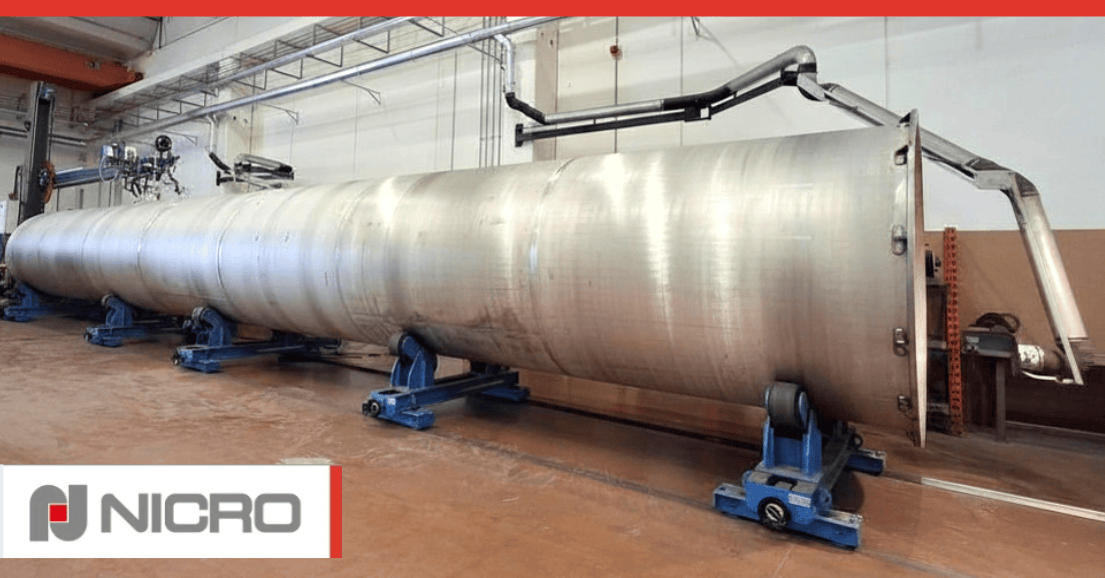
In the industrial atmospheric heat treatment sector, the muffle is one of the key products for ensuring production continuity and optimizing operating costs. When operating consistently above 800°C, the choice of construction material directly impacts the equipment’s lifespan and the frequency of maintenance.
Often, attention focuses on furnace configuration or process parameters. However, it is the metallurgical selection of the muffle that determines the component’s ability to withstand the thermal, mechanical, and chemical stresses typical of treatment plants over time.
The phenomenon of creep and structural stability
For this reason, the choice of material must take into account creep resistance in relation to the actual operating conditions, the expected service life of the component and the characteristics of the entire plant. Indeed, it is not always technically or economically justified to use significantly higher-grade and more expensive alloys if the rest of the furnace is constructed from materials with inferior performance.
At NICRO, we consider the use of nickel-based alloys and superalloys, such as Incoloy 800HT, Alloy 601 or Alloy 602CA, only when the furnace-process system requires it. In these specific contexts, such materials offer superior performance in terms of resistance to deformation at high temperatures, helping to maintain the geometric stability of the crucible over the long term compared to standard stainless steels.
Aggressive Atmospheres: Beyond Simple Heat Resistance
Temperature is not the only factor that challenges the integrity of a muffle. Carburizing, nitriding, or controlled atmosphere treatments create chemically complex environments that can accelerate metal degradation.
The most specific phenomena include:
- Carburization: In carbon-rich atmospheres, the metal can absorb carbon, altering its mechanical properties and reducing its ductility.
- Cyclic Oxidation: Continuous thermal cycling between hot and cold conditions stresses the metal’s protective oxide layer, which can spall (flake off), progressively thinning the muffle wall.
- Localized Chemical Attack: Linked to the specific gas mixtures used in the treatment process.
The correct combination of nickel, chromium, and other alloying elements enables the development of stable, adherent protective surface layers that significantly slow down the chemical degradation of the material. However, since no single material is universally suitable for every application, alloy selection must always be evaluated by considering the entire furnace-process system.
Welding engineering: a pillar for component durability
The performance of a muffle does not depend exclusively on the quality of the alloy used, but also on the correct execution of its joints. Historically, the welded joint is one of the areas most sensitive to high-temperature thermomechanical stress.
At NICRO, we apply rigorous and certified procedures tailored to the sheet metal work and welded fabrications that characterize these components:
- Qualified procedures and control systems compliant with international standards (such as ISO 3834-2).
- Advanced welding technologies (including the Force TIG process).
- Targeted Non-Destructive Testing (NDT) (such as dye penetrant inspection), performed by specialized personnel to promptly detect welding defects or surface cracks.
The goal is to guarantee the integrity of the welded joints by identifying and eliminating any discontinuities that could compromise the component’s service life during operation.
Transforming a Replacement into a Performance Upgrade
Replacing a worn muffle should not be viewed merely as a routine maintenance cost. If the customer is experiencing recurring operational issues, this moment can be transformed into an opportunity for optimization.
Through our Reverse Engineering services, we analyze the degradation mechanisms of the original component, evaluating operating temperatures, geometries, and the materials historically used. When actual application conditions warrant it, NICRO can support the customer by proposing optimized solutions through:
- The recommendation of alternative materials or superior alloys.
- The optimization of thicknesses at points of maximum stress.
- Targeted geometric modifications aimed at improving structural behavior.
The goal is to provide concrete support to increase the reliability, lifespan, and overall performance of the system based on its actual maintenance history.
Is your equipment experiencing premature deformation or cracking on muffles currently in operation? Our technical department is at your disposal to assist you in analyzing the operating conditions and evaluating the most suitable engineering solution for your needs. Contact us for specialist consulting.


