
Thermomechanical analysis of radiant tubes: metallurgical and design criteria for optimising heat flux
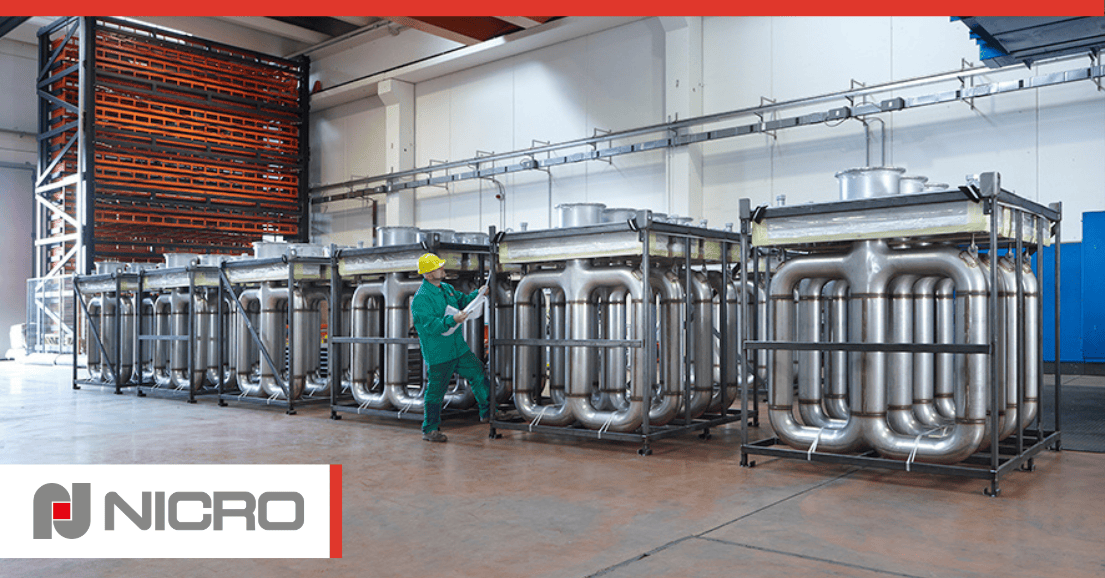
In indirect heating systems for industrial furnaces, the radiant tube acts as a true gas-to-gas heat exchanger. Its primary function is to convert the thermal energy generated by internal combustion into radiant flux directed towards the load, whilst isolating the process atmosphere from the by-products of the burner’s chemical reaction.
In this context, the component is subjected to a dual stress regime: a chemical-physical stress on the inner wall (related to the kinetics of the combustion gases) and a stress on the outer wall (linked to the furnace atmosphere). For plant engineers, understanding how the choice of alloy affects thermal conductivity, resistance to transients and structural stability is a fundamental prerequisite for a proper analysis of operating costs.
The wall temperature gradient and heat transfer efficiency
One of the most complex aspects of managing radiant tubes is the radial temperature gradient, that is, the temperature difference between the inner surface (exposed to the flame) and the outer surface. As the tubes operate continuously at temperatures above 800°C, the choice of material cannot be based solely on alone refractory properties but must consider the thermal conductivity of the alloy in relation to the geometric thicknesses.
Sub-optimal thermal conductivity or excessive wall thickness leads to an increase in the internal temperature of the tube compared to the useful temperature of the furnace. This phenomenon accelerates local metallurgical degradation and reduces the system’s radiation efficiency.
At NICRO, working to order and in accordance with the dimensional constraints imposed by furnace designers, we assess the suitability of solutions using alloys with a high nickel and chromium content (such as Incoloy 800H or Alloy 601). The aim is to meet the heat transfer requirements of the application, reducing parasitic resistance without compromising the structural integrity of the component.
Localised stress dynamics: thermal shock and elbow geometry
Unlike linear static structures, radiant tubes (particularly in ‘U’, ‘W’ or single-ended radiant tubes configurations) are subjected to asymmetric localised mechanical stresses.
The most critical areas are typically found at bends and changes in cross-section, where two distinct phenomena overlap:
- thermal shock caused by flame impact, as the fluid dynamics of combustion can generate localised thermal peaks (hot spots) in areas where gases stagnate or at points of direct flame impact on the first bend of the tube.
- Thermal expansion constraints: during transient phases (start-up, shutdown or ramp changes), the different sections of the pipe expand at different rates. If the support systems or geometric tolerances are not perfectly calibrated, destructive bending stresses are generated.
The use of superalloys with a stable austenitic matrix helps to mitigate the effects of both phenomena, limiting the propagation of thermal fatigue cracks in the geometrically most vulnerable areas.
Microstructural integrity of the joint in rolled geometries
Radiant tubes for the heat treatment industry are predominantly manufactured from cold-formed sheet metal which is subsequently welded. The microstructure of the weld bead and the Heat-Affected Zone (HAZ) is a critical factor for the service life of the products.
To ensure consistent performance of the tube, NICRO applies strict operating protocols in accordance with international manufacturing standards (including ISO 3834-2 certification):
- metallurgical compatibility of the filler metal; use of specific filler materials, often with a higher alloy content than the base metal, to compensate for the segregation of alloying elements during solidification of the weld pool.
- Targeted surface inspections: given the thinness of the sheets used, qualified staff focus on identifying surface discontinuities using Non-Destructive Testing (NDT) methods, such as penetrant testing, to eliminate micro-notches that could act as initiation points before the product is put into service.
Analysis of failure mechanisms and collaborative optimisation
When a radiant tube suffers structural failure or premature cracking, a purely replacement-oriented approach is often inefficient. Understanding the root cause (root cause analysis) requires an examination of the metallurgical evidence found in the field.
NICRO supports technical departments and maintenance teams by analysing the condition of the decommissioned component through dedicated Reverse Engineering processes. Where actual operating conditions have deviated from the nominal design parameters, collaboration with our technical department enables the evaluation of optimisation options focused on:
- targeted recalibration of wall thicknesses based on the burner’s thermal map.
- Proposal of alternative metallurgical variants offering greater chemical stability when exposed to specific combustion residues.
- Revision of fitting tolerances to facilitate the free thermal movement of the tube within the supports.
If the radiant tubes in your system show abnormal deformation, fractures at the welds or a loss of thermal efficiency, our technical department is on hand to examine the operating specifications and assist you in selecting the most suitable design. Please contact us for expert advice.


